
| Denial of Risk and Peril An Overview of “How the Mighty Fall” by Jim Collins November, 2012 Sorry for last month’s departure from my overview of “How the Mighty Fall.” I really felt that with the pending election I needed to share a bit of my own personal philosophy since so much of the election focused on our economy and how we should move forward. The nation has spoken and hopefully we don’t see four more years of the same policies that are hindering our long term growth while digging us deeper into debt. I really hope both sides of the aisle can come to terms, but only time will tell… The third stage of decline is somewhat apropos to where the nation currently sits; teetering at the top of the fiscal cliff. The next few decisions are critical to either reverse the decline or send us spiraling down into another recession or worse yet, a depression.
In the late 1980’s Motorola began to invest seed capital in a new technology that would guarantee a phone connection from any point on Earth; the new service was called Iridium. After a series of low-orbiting satellites were launched, Motorola spun Iridium off as a separate company and continued to fund the development of the concept. By 1996, Motorola had sunk over $500 million in cash and guaranteed over $750 million in loans on Iridium’s behalf; exceeding Motorola’s entire profit for the same year. However, Iridium still wasn’t ready for commercial use and would need significantly more capital in order to launch the 60 plus satellites required for service. At the same time, the business case for Iridium had changed dramatically. In the 1980s cell coverage was sparse, at best, but by the mid-1990s traditional cell service blanketed much of the globe, including many rural areas in developing nations. There was mounting empirical evidence against moving forward with the venture but Iridium, at the direction of its largest shareholder, Motorola, decided to move forward, and in 1998 Iridium went live for new customers. The very next year Iridium filed for bankruptcy and defaulted on more than $1.5 billion in loans. Motorola was forced to write-off more than $2 billion in losses related to Iridium, helping to push Motorola to the next stage of decline. Motorola needed to make a tough decision, cut bait and walk away from the $500 million in cash they invested or hope for a big hit despite the fact the service was no longer relevant. Motorola rolled the dice and nearly lost it all. In contrast, by the late 1970s Texas Instruments (TI) had developed and sold a novel toy that spoke words to children to help them learn to spell. They called it Speak & Spell (I was a huge fan). While the end product was just a toy, the brain behind the device was the DSP chip. TI’s initial investment in the DSP chip was $150,000, a mere fraction of their revenues for the year. By 1986, TI had generated $6 million in revenues from DSP chips, which supported further investment in the technology. Over time customers began to find new uses for DSP in modems and in a variety of communication devices. In 1993, TI landed a contract with Nokia to create DSP chips for their digital cell phones. Four years later, DSP chips could be found in more than 22 million phones around the world. In a bold move, TI’s CEO decided to sell off TI’s defense and memory chip businesses in order to focus on the growing DSP market. But, contrary to how it sounds on paper, TI didn’t make a rash decision. They didn’t bet the farm on a new shiny object. Over the course of more than 15 years, TI made a series of small investments into DSP in order to slowly turn the flywheel and fully test out the business case, and only when the evidence supported the decision did they decided to move forward. TI didn’t bet big in 1982 when they were able to put DSP on a single chip, nor when they had generated $6 million in revenues in 1986. They waited until the decision was essentially made for them. Thankfully, the bold decision paid off and by 2004, TI controlled more than half of the $8 billion DSP market. Collins points to an interesting concept used by Bill Gore, founder of W.L. Gore & Associates, for decision making and risk taking, called the “waterline” principle. The concept is pretty simple; think about being on a ship at sea and any bad decision will blow a hole in the side of the ship. If you blow a hole above the waterline, there will be damage to the ship but you can still patch the hole (learn from your mistake) and move on. However, if you blow a hole below the waterline, the ship will immediately take on water and begin to sink. Can you still patch the hole? Yes, but it will be incredibly difficult and you will continue to sink until the ship has been fully repaired. Make a really bad decision and the hole may be too large to repair and the ship will quickly sink to bottom of the ocean. Again, businesses still can make big bets but they need to be prepared in the event they make the wrong decision. Collins suggests asking three questions when making risky bets and decisions in the event of ambiguous or conflicting data: 1) What’s the upside if events turn out well? 2) What’s the downside if events go very badly? 3) Can you live with the downside? In other words, would a bad decision blow a hole above or below the waterline, and can you survive in either case? The financial meltdown of 2008 shows what happens when you avoid these types of questions. As the housing market bubble grew at an unprecedented rate, so did the likelihood of a catastrophic real estate crash. Do you think anyone on Wall Street and abroad ever weighed the upside of dramatically increasing leverage and exposure to mortgage-backed securities against the downside of a housing market crash followed by a worldwide credit crisis? The stakeholders of Merrill Lynch, Fannie Mae, Bear Stearns and Lehman Brothers certainly bet big on the upside of the credit market but failed to consider what would happen if they were wrong. In the end, they either sold out or simply disappeared altogether. Remember, companies in and of themselves aren’t making the decisions, they are made by a team of executives. A successful company must have the “right” people in the “right” seats working towards the “right” goals. Leadership teams on the way down tend to exhibit similar dynamics: 1) Those in power are shielded from grim facts for fear of penalty. 2) Team members agree with strategic decisions yet do not unite to make the strategies a success. 3) Team members argue to “look smart” or to simply improve their own interests rather than argue to find the best answers. 4) Team members conduct a post-mortem of a bad decision in order to assign blame instead of learning from their painful experiences (this is one of my favorites). Bold decisions are ok and often lead to significant innovations and gains in the market. However, decline and, ultimately, demise can be self-inflicted if a company refuses to listen to its customers, the market, and, more importantly, its employees. No matter how big or small, the wrong decision can send any company to the bottom of the ocean. ~TJM ——————– |
| BABE OF THE MONTH “Desiree”
2005 Deere 800C Contact: Travis Mottet |
| BOOZE REVIEW An Unexpected Treat
Names have been changed to preserve the innocent, so for the sake of the story, let’s call him “Bob.” I flew out on very short notice to meet Bob at Wagner’s yard. I had only spoken with Bob on the phone over the prior two weeks and he claimed to be working with a major player and would be buying dozens of machines in the coming months. I figured anyone who would spend the money to fly out to inspect a machine was serious, so I plunked down $700 on Southwest and flew out to meet him the next day. Bob picked me up at the hotel and we drove out to Wagner’s yard. The drive was about 15 minutes so we had a little time to get to know each other. Bob was from Texas and had the accent and boots to prove it. We were about the same age and were both fairly new to the industry. He seemed like a straight shooter and was very easy to get along with. We arrived at the yard and spent the next 10 minutes looking over the scraper. It was a clean unit with good tires, no blow-by, good chains, and best of all, was priced right. Bob hoped out of the cab and said, “You got yourself a deal!” and we shook hands. Neither of us had flights until the next morning, so I suggested that we grab a drink and a bite to eat to celebrate our first deal. We headed back into town and ended up at some Hooters knock-off aptly named “Twin Peaks.” Get it? I wasn’t in the mood for a beer and it seemed too early in the evening for a scotch so I asked the girl what she could suggest. Her repertoire of beverages was fairly limited, so she could only suggest a few drinks that were “on special” and said the Tennessee Honey with ginger ale was pretty good. I ordered one and hoped for the best but expected the worst. I was quite surprised at how good my first sip tasted. It wasn’t too sweet as you would expect from a liqueur and the ginger ale gave it a little zing to the aftertaste. I’m really not one for cutting my drinks with mixers, so the next order was for Tennessee Honey on the rocks, which was perfect. The ice really opened up the whiskey as it melted, while the honey masked most of the typical alcohol bite. The next drink turned into a few more and I was officially hooked. Bob and I wrapped up dinner and made a slight detour to the local casino before retiring to our respective hotels. We both had early flights and Bob assured me the money for the scraper would be in my account by the following week. I wish the trip to Albuquerque had produced two new friends but sadly I was left with just the drink as Bob dragged the deal on for another 3 weeks and then dropped off the face of the earth. Oh well, at least I can always count on Jack. ~TJM |
| LIKE WHAT YOU SEE? Subscribe now, and be the first to receive each new edition!!! |
Category Archives: Newsletter


IRON TIMES – Volume 4
| Food For Thought Is Money The Root Of All Evil October, 2012 I’ll admit it, I’m phoning in this month’s newsletter. I haven’t had time to sit down and write for any extended period of time. However, I have been thinking a lot about the upcoming election and what it all means for the direction of our country. I’ve also been listening to Ayn Rand’s “Atlas Shrugged” on my iPhone while running and working out. I wanted to share an excerpt from one of the book’s main characters since much of this election surrounds our economy and whether the wealthy should be taxed or rewarded for their efforts. This has been a polarizing topic and I believe this excerpt makes an excellent argument in favor of pure capitalism. Keep in mind – this was written over 55 years ago. Here goes: “So you think that money is the root of all evil?” said Francisco d’Anconia. “Have you ever asked what is the root of money? Money is a tool of exchange, which can’t exist unless there are goods produced and men able to produce them. Money is the material shape of the principle that men who wish to deal with one another must deal by trade and give value for value. Money is not the tool of the moochers, who claim your product by tears, or of the looters, who take it from you by force. Money is made possible only by the men who produce. Is this what you consider evil? “When you accept money in payment for your effort, you do so only on the conviction that you will exchange it for the product of the effort of others. It is not the moochers or the looters who give value to money. Not an ocean of tears nor all the guns in the world can transform those pieces of paper in your wallet into the bread you will need to survive tomorrow. Those pieces of paper, which should have been gold, are a token of honor–your claim upon the energy of the men who produce. Your wallet is your statement of hope that somewhere in the world around you there are men who will not default on that moral principle which is the root of money, Is this what you consider evil? “Have you ever looked for the root of production? Take a look at an electric generator and dare tell yourself that it was created by the muscular effort of unthinking brutes. Try to grow a seed of wheat without the knowledge left to you by men who had to discover it for the first time. Try to obtain your food by means of nothing but physical motions–and you’ll learn that man’s mind is the root of all the goods produced and of all the wealth that has ever existed on earth. “But you say that money is made by the strong at the expense of the weak? What strength do you mean? It is not the strength of guns or muscles. Wealth is the product of man’s capacity to think. Then is money made by the man who invents a motor at the expense of those who did not invent it? Is money made by the intelligent at the expense of the fools? By the able at the expense of the incompetent? By the ambitious at the expense of the lazy? Money is made–before it can be looted or mooched–made by the effort of every honest man, each to the extent of his ability. An honest man is one who knows that he can’t consume more than he has produced. “To trade by means of money is the code of the men of good will. Money rests on the axiom that every man is the owner of his mind and his effort. Money allows no power to prescribe the value of your effort except the voluntary choice of the man who is willing to trade you his effort in return. Money permits you to obtain for your goods and your labor that which they are worth to the men who buy them, but no more. Money permits no deals except those to mutual benefit by the unforced judgment of the traders. Money demands of you the recognition that men must work for their own benefit, not for their own injury, for their gain, not their loss–the recognition that they are not beasts of burden, born to carry the weight of your misery–that you must offer them values, not wounds–that the common bond among men is not the exchange of suffering, but the exchange of goods. Money demands that you sell, not your weakness to men’s stupidity, but your talent to their reason; it demands that you buy, not the shoddiest they offer, but the best that your money can find. And when men live by trade–with reason, not force, as their final arbiter–it is the best product that wins, the best performance, the man of best judgment and highest ability–and the degree of a man’s productiveness is the degree of his reward. This is the code of existence whose tool and symbol is money. Is this what you consider evil? “But money is only a tool. It will take you wherever you wish, but it will not replace you as the driver. It will give you the means for the satisfaction of your desires, but it will not provide you with desires. Money is the scourge of the men who attempt to reverse the law of causality–the men who seek to replace the mind by seizing the products of the mind. “Money will not purchase happiness for the man who has no concept of what he wants: money will not give him a code of values, if he’s evaded the knowledge of what to value, and it will not provide him with a purpose, if he’s evaded the choice of what to seek. Money will not buy intelligence for the fool, or admiration for the coward, or respect for the incompetent. The man who attempts to purchase the brains of his superiors to serve him, with his money replacing his judgment, ends up by becoming the victim of his inferiors. The men of intelligence desert him, but the cheats and the frauds come flocking to him, drawn by a law which he has not discovered: that no man may be smaller than his money. Is this the reason why you call it evil? “Only the man who does not need it, is fit to inherit wealth–the man who would make his own fortune no matter where he started. If an heir is equal to his money, it serves him; if not, it destroys him. But you look on and you cry that money corrupted him. Did it? Or did he corrupt his money? Do not envy a worthless heir; his wealth is not yours and you would have done no better with it. Do not think that it should have been distributed among you; loading the world with fifty parasites instead of one, would not bring back the dead virtue which was the fortune. Money is a living power that dies without its root. Money will not serve the mind that cannot match it. Is this the reason why you call it evil? “Money is your means of survival. The verdict you pronounce upon the source of your livelihood is the verdict you pronounce upon your life. If the source is corrupt, you have damned your own existence. Did you get your money by fraud? By pandering to men’s vices or men’s stupidity? By catering to fools, in the hope of getting more than your ability deserves? By lowering your standards? By doing work you despise for purchasers you scorn? If so, then your money will not give you a moment’s or a penny’s worth of joy. Then all the things you buy will become, not a tribute to you, but a reproach; not an achievement, but a reminder of shame. Then you’ll scream that money is evil. Evil, because it would not pinch-hit for your self-respect? Evil, because it would not let you enjoy your depravity? Is this the root of your hatred of money? “Money will always remain an effect and refuse to replace you as the cause. Money is the product of virtue, but it will not give you virtue and it will not redeem your vices. Money will not give you the unearned, neither in matter nor in spirit. Is this the root of your hatred of money? “Or did you say it’s the love of money that’s the root of all evil? To love a thing is to know and love its nature. To love money is to know and love the fact that money is the creation of the best power within you, and your passkey to trade your effort for the effort of the best among men. It’s the person who would sell his soul for a nickel, who is loudest in proclaiming his hatred of money–and he has good reason to hate it. The lovers of money are willing to work for it. They know they are able to deserve it. “Let me give you a tip on a clue to men’s characters: the man who damns money has obtained it dishonorably; the man who respects it has earned it. “Run for your life from any man who tells you that money is evil. That sentence is the leper’s bell of an approaching looter. So long as men live together on earth and need means to deal with one another–their only substitute, if they abandon money, is the muzzle of a gun. “But money demands of you the highest virtues, if you wish to make it or to keep it. Men who have no courage, pride or self-esteem, men who have no moral sense of their right to their money and are not willing to defend it as they defend their life, men who apologize for being rich–will not remain rich for long. They are the natural bait for the swarms of looters that stay under rocks for centuries, but come crawling out at the first smell of a man who begs to be forgiven for the guilt of owning wealth. They will hasten to relieve him of the guilt–and of his life, as he deserves. “Then you will see the rise of the men of the double standard–the men who live by force, yet count on those who live by trade to create the value of their looted money–the men who are the hitchhikers of virtue. In a moral society, these are the criminals, and the statutes are written to protect you against them. But when a society establishes criminals-by-right and looters-by-law–men who use force to seize the wealth of disarmed victims–then money becomes its creators’ avenger. Such looters believe it safe to rob defenseless men, once they’ve passed a law to disarm them. But their loot becomes the magnet for other looters, who get it from them as they got it. Then the race goes, not to the ablest at production, but to those most ruthless at brutality. When force is the standard, the murderer wins over the pickpocket. And then that society vanishes, in a spread of ruins and slaughter. “Do you wish to know whether that day is coming? Watch money. Money is the barometer of a society’s virtue. When you see that trading is done, not by consent, but by compulsion–when you see that in order to produce, you need to obtain permission from men who produce nothing–when you see that money is flowing to those who deal, not in goods, but in favors–when you see that men get richer by graft and by pull than by work, and your laws don’t protect you against them, but protect them against you–when you see corruption being rewarded and honesty becoming a self-sacrifice–you may know that your society is doomed. Money is so noble a medium that is does not compete with guns and it does not make terms with brutality. It will not permit a country to survive as half-property, half-loot. “Whenever destroyers appear among men, they start by destroying money, for money is men’s protection and the base of a moral existence. Destroyers seize gold and leave to its owners a counterfeit pile of paper. This kills all objective standards and delivers men into the arbitrary power of an arbitrary setter of values. Gold was an objective value, an equivalent of wealth produced. Paper is a mortgage on wealth that does not exist, backed by a gun aimed at those who are expected to produce it. Paper is a check drawn by legal looters upon an account which is not theirs: upon the virtue of the victims. Watch for the day when it bounces, marked, ‘Account overdrawn.’ “When you have made evil the means of survival, do not expect men to remain good. Do not expect them to stay moral and lose their lives for the purpose of becoming the fodder of the immoral. Do not expect them to produce, when production is punished and looting rewarded. Do not ask, ‘Who is destroying the world?’ You are. “You stand in the midst of the greatest achievements of the greatest productive civilization and you wonder why it’s crumbling around you, while you’re damning its life-blood–money. You look upon money as the savages did before you, and you wonder why the jungle is creeping back to the edge of your cities. Throughout men’s history, money was always seized by looters of one brand or another, whose names changed, but whose method remained the same: to seize wealth by force and to keep the producers bound, demeaned, defamed, deprived of honor. That phrase about the evil of money, which you mouth with such righteous recklessness, comes from a time when wealth was produced by the labor of slaves–slaves who repeated the motions once discovered by somebody’s mind and left unimproved for centuries. So long as production was ruled by force, and wealth was obtained by conquest, there was little to conquer, Yet through all the centuries of stagnation and starvation, men exalted the looters, as aristocrats of the sword, as aristocrats of birth, as aristocrats of the bureau, and despised the producers, as slaves, as traders, as shopkeepers–as industrialists. “To the glory of mankind, there was, for the first and only time in history, a country of money–and I have no higher, more reverent tribute to pay to America, for this means: a country of reason, justice, freedom, production, achievement. For the first time, man’s mind and money were set free, and there were no fortunes-by-conquest, but only fortunes-by-work, and instead of swordsmen and slaves, there appeared the real maker of wealth, the greatest worker, the highest type of human being–the self-made man–the American industrialist. “If you ask me to name the proudest distinction of Americans, I would choose–because it contains all the others–the fact that they were the people who created the phrase ‘to make money.’ No other language or nation had ever used these words before; men had always thought of wealth as a static quantity–to be seized, begged, inherited, shared, looted or obtained as a favor. Americans were the first to understand that wealth has to be created. The words ‘to make money’ hold the essence of human morality. “Yet these were the words for which Americans were denounced by the rotted cultures of the looters’ continents. Now the looters’ credo has brought you to regard your proudest achievements as a hallmark of shame, your prosperity as guilt, your greatest men, the industrialists, as blackguards, and your magnificent factories as the product and property of muscular labor, the labor of whip-driven slaves, like the pyramids of Egypt. The rotter who simpers that he sees no difference between the power of the dollar and the power of the whip, ought to learn the difference on his own hide–as, I think, he will. “Until and unless you discover that money is the root of all good, you ask for your own destruction. When money ceases to be the tool by which men deal with one another, then men become the tools of men. Blood, whips and guns–or dollars. Take your choice–there is no other–and your time is running out.” ~ Ayn Rand ——————– |
| BABE OF THE MONTH “Melissa”
2010 Caterpillar D8T Contact: Travis Mottet |
| LIKE WHAT YOU SEE? Subscribe now, and be the first to receive each new edition!!! |

IRON TIMES – Volume 3
| Undisciplined Pursuit Of More An Overview of “How the Mighty Fall” by Jim Collins September, 2012 Last month I started a discussion on Jim Collins’ book “How the Might Fall” and focused on his first stage of decline; Hubris Born of Success. This stage could be quickly summarized as losing one’s focus on what made the company successful in the first place; that is, its core competency. To put it in even simpler terms; drinking your own Kool-Aid and thinking everything you touch will naturally turn to gold. Many companies think they can do anything and while they chase countless “shiny objects,” their core business begins to suffer and they lose the momentum needed to keep the business afloat and slip into a decline. This month I’m going to touch on the second stage which is the Undisciplined Pursuit of More.
In the 1980s, Ames Department Stores acquired Zayre department stores in order to more than double the size of the company within one year. It wasn’t an acquisition based on an underlying strategy like tapping into a better distribution system or a most cost effective supply network. It was done to simply grow the company for the sake of growth. Ames began to use many of Zayre’s strategies which were a clear departure from what made Ames great in the first place. With the help of loss leader promotions (one of Zayre’s strategies), Ames more than doubled its revenues from 1986 to 1989, which was in-line with their initial goals. However, from 1986 to 1992, Ames’ cumulative stock returns fell 98% as the company sunk into bankruptcy and was eventually liquidated in 2002. Contrary to conventional wisdom, most companies fail, not because of laziness, but rather, because of overreaching. They try to grow too fast and either fail to control costs or take unsubstantiated risks. Think about the collapse on Wall Street in 2008; Lehman Brothers, AIG and Bear Stearns didn’t fail due to lack of drive or ambition – they went too far and took too many risks in order to grow profits at record setting levels. Where are they now? In the early 1990s Rubbermaid tried to introduce a new product every day, seven days a week, 365 days per year while entering into a new product category every 12 to 18 months. Does this sound like an ambitious goal, and one that would be incredibly difficult to manage while trying to produce, market and distribute an already expansive offering? Well, it was and as expected Rubbermaid began to fray at the edges, failing to control costs and fill orders in a timely manner. In a statement to investors, Rubbermaid’s CEO originally stated, “Our vision is to grow.” That was it; there was no strategy beyond doing lots of new stuff, all at the same time. Rubbermaid tried to innovate too fast, across too many industries, and in 1995 posted its first loss in decades. The losses forced Rubbermaid to scuttle 6,000 product variations, close 9 production plants and lay off more than 1,100 workers. The company eventually sold out to Newell Corporation in 1998 and never had a chance to recover on its own. Innovation can drive growth, however, chaotic growth can easily bring down a company if not properly managed with a clear strategic goal. In the 2000 annual report shareholders, Merck’s CEO stated, “As a company, Merck is totally focused on growth.” Not to be confused with profitability, research driven R&D or productivity, but rather, plain and simple growth. Unfortunately for Merck, it was about to lose patent protection on five of its drugs that represented close to $5 billion in annual revenue. Generic drugs would eventually undercut Merck’s pricing and deteriorate most of its profitability and Merck wasn’t prepared. Merck had to continually develop new drugs to fuel the same levels of growth it had experienced in prior years, but that wasn’t a simple task. Harvard case studies calculated the probability of a new molecule creating profitable returns at a mere 1 in 15,000. Merck was successful at beating these odds in the past, so when Vioxx was approved by the FDA, Merck seized the opportunity and marketed the product as their best launch ever. By 2002, Vioxx sales rose to $2.5 billion and by 2004 over one hundred million prescriptions were written in the US alone. All efforts were poured into Vioxx not because it was successful but because it had to be a blockbuster. Merck’s only goal was growth and Vioxx was providing the majority of the growth needed to sustain the company. As you might already know, Vioxx was pulled from the shelves in late 2004 amid concerns of heart attacks and strokes with patients using the drug over a prolonged period of time. Merck’s stock dropped nearly $25 billion in one day once the news broke and shareholders lost another $15 billion over the next six weeks. Merck placed all bets on the success of Vioxx. It would have been lauded as a great company had the drug succeeded but hubris can lead a company to make unwarranted commitments for more and more. As soon as you’ve set the expectations too high, if you fall, you fall hard. Merck wasn’t always focused on growth. George Merck II stated his goals back in 1950: “We try never to forget that medicine is for the people. It is not for the profits. The profits follow, and if we have remembered that, they have never failed to appear.” The founders of Merck, Motorola and HP all shared similar goals for their companies. They started their companies and built them with great success based on noble purposes instead of just making money. It was the later generations of CEOs who forgot these lessons and inverted the goals much to the demise of their companies. Think about Apple – it was initially founded to create innovative, simple and user friendly systems. Apple grew because of Steve Jobs’ original vision and failed when they tried to “make money” under the direction of John Scully, an experienced executive (read: suit) from PepsiCo. Apple reclaimed its position as one of the world’s most successful companies once Jobs returned to refocus the company on design and simplicity rather than on profits. Apple just so happened to make a ton of money in the process. Note: Apple generated $8.8 billion dollars in profits in the last quarter and sits on over $19.7 billion in cash. Not too bad for a hippie, college drop out! Running a public company is a tremendously difficult task. CEOs face the relentless task of pleasing their shareholders and most end up focusing on short term objectives like quarterly earnings growth. Successful companies focus on building shareholder value rather than maximizing shareflipper price. They do not succumb to growth that undermines long-term value, but that is becoming harder and harder to do nowadays. Wall Street demands continuous growth and punishes companies that don’t perform as expected. Few companies have the strength and energy to ignore these forces in order to focus on measured growth in concert with their underlying strategy. Only time will tell if the pressures of Wall Street will influence such innovative companies as Facebook and demand relentless growth. Until only a few months ago Facebook was privately held and happily developing products for its users rather than profits for Wall Street. Will its users tolerate endless ads or other disruptions in the pursuit of revenue growth or will they look to other providers to keep them connected with friends and family? There was a time when MySpace ruled Social Media and Facebook was virtually unknown; remember what happened to them? ~TJM ——————– |
| BABE OF THE MONTH “Jessica”
2011 Caterpillar 320DL Contact: Travis Mottet |
| BOOZE REVIEW If Money Is No Object
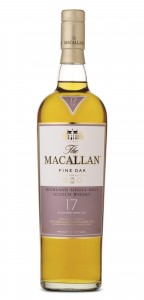
I was reacquainted with a former grad school classmate a couple years ago during a chance networking meeting at Starbucks. Chuck and I attended a few classes together and even teamed up on a project for a marketing class. He was working on his JD/MBA while I was working on my MBA. We never really attempted to stay in contact once we both graduated but I knew he would stay in San Diego and pursue a career in law while I went on to work in finance. When I ran into Chuck 11 years later I was actually in the market for a new corporate attorney. Chuck worked for a boutique law firm downtown and I hired him on the spot. Most of our subsequent conversations surrounded business. We needed to reorganize the corporate ownership structure of several entities and firm up some of our consulting and employment agreements; very boring stuff indeed. We rarely met in his office and held most of our meetings during lunch at a social club in his building. During one of our meetings the topic of booze came up. Chuck was more of a vodka man while I was a scotch drinker. He complained about the taste of scotch and said he wasn’t much of a fan. I told him I was in the same boat until I forced myself to have one glass of scotch each night for 40 days so I could acquire the taste. It worked after 2 weeks. Chuck laughed at the idea but said he would try it. Three weeks later Chuck was hooked. Chuck introduced me to a few of his drinking buddies over the next few months and our lunch meetings quickly evolved into happy hour meetings. One of Chuck’s buddies was a guy named Kenny who works as an investment banker and knows just about everyone in town. His best connection is with the North American Ambassador for The Macallan. Ian held a Macallan tasting event a couple times a year and, thanks to Kenny, I suddenly found myself with a VIP pass to his next event. The event was something every scotch drinker should attend at least once in their life. The night started out with a tasting of a 10 year old, then 12, then 15, then 17, then 18, then 21 and finally a 25 year old scotch. Along the way Ian was on stage describing each drink along with historical/hysterical facts on Scotland, The Macallan, the distillation process, and several jokes about the English. Of all the varietals we sampled, the 17 year old was certainly my favorite and I try and treat myself to a bottle every once in awhile. I have Chuck to thank for the introduction to the 17, but I also curse his name each time I’m in the checkout line since a bottle typically sells for $130 and up. Needless to say, I don’t treat myself very often. ~ TJM |
| LIKE WHAT YOU SEE? Subscribe now, and be the first to receive each new edition!!! |


 I am one of the few people that actually like attorneys – not because they are nice people or because they provide a valuable service, but because they are often well connected.
 IRON TIMES – Volume 2
| Hubris Born of Success An Overview of “How the Mighty Fall” by Jim Collins August, 2012 I really enjoy reading in my spare time, and while it would be easy to gravitate towards mindless novels like “The Hunger Games” or “Fifty Shades of Grey” I actually prefer to read books on management, leadership, economics and the occasional biography.
I’ve always been a fan of Jim Collins and his prior work “Good to Great” and “Build to Last” but I always thought there was something missing in his observations. There are thousands of companies that start out small, grow and become successful and dominate their industry but very few maintain their position in the market let alone survive for 20, 40 or even 100 years. I stumbled across this book at the airport during a trip to New Jersey for a wedding. It had only been a couple years since the US (and the world, for that matter) slipped into a deep recession, so I was surprised to see a book like this on the shelves so quickly. After reading the preface, I realized this was exactly what every business leader should be reading right now, regardless of the state of the economy or their business. “How the Mighty Fall” discusses the five step-wise stages of decline: Stage 1: Hubris Born of Success, Stage 2: Undisciplined Pursuit of More, Stage 3: Denial of Risk and Peril, Stage 4: Grasping for Salvation and Stage 5: Capitulation to Irrelevance or Death. Since I’m short on space, I am going to highlight one stage at a time. Stage 1: Hubris Born of Success The ancient Greeks defined the concept of hubris as excessive pride that brings down a hero. Collins further explains that companies with excessive pride often take undisciplined leaps into areas where a company has no prior experience while ignoring their core business. Successful companies do not become great overnight. It involves a sustained, cumulative effort, akin to turning a giant, heavy flywheel. You cannot make a ten-ton flywheel spin with one big push; it take years and often decades to get it moving smoothly and efficiently. If an organization focuses all of its energy on one task (i.e. turning a flywheel, developing software or building highways) it will become an expert and a market leader over time. However, too often, once an organization gets one flywheel going, it may try to start up a second, third oreven forth flywheel out of boredom or perceived opportunities. There are countless companies that have tried to master multiple markets because they were successful in their first venture. In today’s fast paced world that we live in, success is often viewed as deserved or entitled, rather than accidental, momentary, or even hard earned. Unfortunately, people begin to “drink their own Kool-Aid” and believe that success will continue no matter what the organization decides to do next. This is where most companies start to trip themselves up. A company with lack of discipline and focus will start to divert creative attention to new flywheels and fail to improve upon their primary flywheel as before. I call this the “shiny-object syndrome” and have seen it countless times during by days as a consultant. An executive sees something fun and exciting outside of its “boring” day-to-day product or service and chases it until he sees another opportunity and begins to chase it, then another and another, ad infinitum, until he and his staff are so confused that they don’t know what to work on anymore. In the flywheel example, the new flywheels either take longer to spin than expected, require more resources than planned, or they simply don’t spin and fail from the start. Unfortunately, once a company begins to turn its energy and focus back to its primary flywheel, they may find it losing momentum, wobbling or completely off the track. I have seen this first hand and can attest that once you divert any substantial time and energy away from your primary flywheel, core competency or in simple terms, your cash cow, you may find your cow has dried up and can no longer support itself and the various pet projects that you wanted to focus on from the start. Make sure you don’t confuse these statements as “don’t ever change your business.” There are dozens of well known and well respected companies that have gone out of business because they refused to change. This is what Collins refers to as “confusing what and why.” Companies need to understand the underlying causes of their success. That is the “why” in the statement. Wal-Mart became one of the largest companies in the world not just because it sells a lot of stuff, it started with a vision: “We save people money so they can live better.” Everything else that it did to build the company was centered on that idea, and as it grew it continued to develop efficiencies in purchasing, distribution and merchandising so its end user, the customer, can enjoy greater savings. Wal-Mart’s biggest competitor throughout the ‘70s and ‘80s was Ames Department Store and though it was larger, better known and more successful than Wal-Mart in the early ‘80s, it is now long gone and Wal-Mart is the second largest company in the world. What happened? How did Wal-Mart overcome Ames, which was the dominant force in the retail world for so many years? A big part of the answer resides in Sam Walton’s deep humility for his success and his strong desire to learn from others and improve upon Wal-Mart’s core business. Meanwhile, his arrogant competitor maintained the stance that “we will continue to keep things just the way they are and we will continue to be successful because-well, we’re Ames!” Ames and its leaders were certainly arrogant, and one could argue that karma may have played a part in driving Ames into the ground, but it was more likely the culture that inevitably destroyed Ames from the inside out. Walton and, more importantly, the people that he hired were highly inquisitive and continually wanted to learn. Becoming #1 wasn’t the end goal for Walton and Wal-Mart as it was for Ames; it was a byproduct of its efforts to provide its customer with the lowest priced products “so they could live better.” The “why” in a company’s mission statement can never be achieved; it can only guide a business to focus and improve upon its primary flywheel. The most important lesson that I learned from this first stage isn’t so much what made Wal-Mart, or any other major brand, so successful, but rather, what went wrong with Ames. Think about some of the other major brands that are either long gone or are shadows of what they once were: Circuit City, Blockbuster, Montgomery Ward, Mervyns, TWA. Also, think about what will happen to others like Research In Motion (Blackberry), Suzuki and Pacific Sunwear in the coming year. Where did they go wrong and what lessons can you learn from their mistakes? In the next installment, I’ll touch on the second stage: Undisciplined Pursuit of More, which is exactly what Ames and others, including Rubbermaid and Merck, did while at the top of their industries and the price they ultimately paid. ~TJM ——————– |
| BABE OF THE MONTH “Ashley”
2009 Caterpillar D6TXL Contact: Travis Mottet |
| BOOZE REVIEW Rocky Mountain Whiskey?
After high school we went to separate colleges in Washington, California and Arizona. I never moved back to Arizona after being bit by the San Diego bug and one friend spent a year back in Arizona for work then moved to Colorado to get married and to start his career in civil engineering. The third friend stayed in Arizona, got married and started working in information technology. However, he eventually made his way too and started a family of his own. The three of us never really lost touch but we didn’t get a chance to see each other often enough. New careers and new families took up most of our time and it became harder and hard to “make time to see each other.” Over the past few years as our lives have started to settle down we made a pact to get together at least once a year. So far, the trips have been absolutely fantastic; we’ve golfed in Taos, mountain biked in Keystone, attended a few beer festivals, and recently shot trap and toured a few microbreweries. During my last trip, Colorado Springs and parts of west Denver were plagued with a series of forest fires. You could hardly see the magnificent Rockies to the west of town with all of the smoke in the air. My friend in Colorado Springs was never in any immediate danger but the photos that he took from his back patio made it look like the entire city was on fire. The day before I was scheduled to fly out we almost scrapped the whole trip due to the air quality and the fact that parts of Colorado Springs might have to evacuate. Thankfully, we decided to move forward with our plans; otherwise, I would have never been introduced to Stranahan’s Colorado Whiskey. My friend in Westminster has been drinking whiskey for a long time, and now that he lives in Colorado, he’s a huge proponent of microbrews and anything local to Colorado. Only an hour into my trip he treated me to my first taste of Stranahan’s. Being more of a “scotch” guy I didn’t think I would like a blended whiskey. I was dead wrong! This is one of the smoothest whiskeys I have ever had. It almost tastes like Irish Whiskey but it has a smooth flavor all its own. The only problem; you can only buy it in Colorado since they make it in very small batches. Oh well, I guess I’ll have to see my two best friends a little more often now. ~ TJM |
| LIKE WHAT YOU SEE? Subscribe now, and be the first to receive each new edition!!! |

 A number of years ago my two best friends moved from Phoenix (where we grew up) to Colorado. One landed in Colorado Springs and the other moved to Westminster, north of Denver. Growing up, the three of us lived within a few miles of each other and did just about everything together; we were all involved in Boy Scouts (all earning Eagle Scout), we went snow skiing, took road trips and stayed up most nights playing video games.
 IRON TIMES – Volume 1
| Aggregate Recycling; Good for the Environment, Good for Business An Interview with Jeff Halloran, President of WYROC Materials July, 2012 Welcome to the first edition of IRON TIMES! In this month’s edition, we interview Jeff Halloran, President of WYROC Materials and find out how his company benefits the environment and how he is finding new opportunities in this down economy. What’s the story behind that name, WYROC? My father was a cement salesman. One of his clients was Wiley Brothers Transit Mix. One of the brothers passed away, and the other brother wanted to sell. So, my dad bought the company and went out of the cement business and into the ready-mix concrete business. He shortened the name to Wiley Transit Mix, and then found that he’d have more opportunities and a better market if he got out of the ready-mix business and focused just on supplying rock and gravel, and shortened the name to Wiley Rock, and eventually shortened that to WYROCK. He kept the goodwill from Wiley over all the years, plus it was kind of a tradition back then that a lot of the competitors and rock suppliers had some kind of abbreviated word and then “rock.” As the company changed, we differentiated because we took the K off it. So we’re now W-Y-R-O-C. WYROC is one of the few aggregate companies that works with recycled materials rather than virgin rock. How did you get into recycled rock? We transitioned into that over the years. I think we were one of the first in Southern California. The last time they did a measure, we were number three in the nation in recycling. To put a little bit of a scope to it, if you look at curbside recycling, we would recycle, back in the day, probably twice the amount that they would do to curbside recycling from North LA to the border of Mexico and on the west, to the Pacific and to the East, the border of California. As a result, we have significantly diverted material from the landfill into a building product. The past few years have been difficult for the construction industry. What have you learned during the down economy and how have you adapted? We’ve had to change on several levels. First, geographically, there are areas that we serviced that are just completely dead. So, we have closed those operations. We no longer supply to them because they don’t have a need. What we’re also doing is expanding our offering. Our offering before, and continues to be, a bulk product sold in the big 18-wheel trucks you see on the road. We’re also looking at different ways to package it in polybags or what they call super sacks, which are one-ton sacks they can put in the back of a pickup truck. What that does is it gives the consumer access to a recycled green product that they never had before. So that is a new niche. Your company maintains eight core values. Can you sum up the values of WYROC? The overlying thing is, we want to be known as passionately innovative. I think that’s been our tradition. Being the first one to recycle and now moving into a new consumer market. Everything with our values not only supports that, but also insists on a civility between each other and our customers. That is a core thing – be responsive and react appropriately, and solve their problems. Any Signs of Improvement in the Economy? My expectations are for not much of an improvement in the bulk market. That’s probably going to remain slow for some time. We’re seeing some matching by the government with different measures and programs. Those probably will not trickle down – at least in any immediate way – to the consumer and the homebuilder. That will put public employees to work, but it isn’t going to affect the private industry probably that much. Do you have any advice for someone who is running their own business during in this down economy? The thing that I’ve taken out of going through this change in this economy is I define myself pretty narrowly as kind of a quirky industry. You know – Fred Flintstone. Every time you talk about it, people just shake their head. You start getting a mindset that maybe you’re not special, but you’re unique, and your problems are unique. What I’ve discovered through networking and discussions is there are core problems that exist across all industries. They’re just flavored a little bit different. There are solutions that you can reach to. You just have to tweak it a little bit to make it on point for yourself. So, don’t think you’re so special that you can’t pick up a good business book and get principles out of it that you can apply. If you could meet someone who’s living or dead; who would it be? Joshua Chamberlain. He was a Colonel at Gettysburg. He was in charge of holding one of the flanks. He was from Maine. He was basically given the charge, “You hold this line. If you don’t, we will lose.” He had 200 men to start with. He was down to 80 and no ammunition. The Confederates were re-mounting for a charge, and he told his men, “Fix bayonets – charge!” with no ammo. They couldn’t believe the order, but they did it. When the Confederates saw that, they surrendered, and he saved the day. For more information on Jeff Halloran and WYROC Materials, please visit www.WYROC.com |
| BABE OF THE MONTH “Erin”
2002 Caterpillar D8T Contact: Travis Mottet |
| BOOZE REVIEW A New Friend; Irish Whiskey
After a week in Switzerland, Erin and I flew from Zurich to Dublin and landed sometime around midnight. We decided to rent a car at the airport so we could get up early and drive west to Limerick for a few days. Looking back, that was a horrible idea since 1) we didn’t know where we were going and the GPS was absolutely worthless, 2) it was pitch black out with very few street lights and 3) neither of us have ever driven a car with right hand steering. Thankfully, I knew how to drive a manual transmission or else we would have never left the airport. After getting completely lost and damn near driving down the wrong way on the toll road, I reluctantly stopped at a local convenience store to ask for directions. If I didn’t see it with my own eyes, I wouldn’t have believed it either, but there behind the counter was an Indian name Ramesh. I almost burst out laughing at the irony but I held back since I was desperate and he was the only one could help me. I thanked him for the directions and headed out the door to bravely venture back out onto the roads. After a few more close calls we finally made it to our hotel in one piece. I was a nervous wreck and Erin and I weren’t on speaking terms. I dropped our bags in our room and promptly headed to the bar for a nightcap. There were only three or four people left in the bar at that hour but I only cared about one man; the bartender. He greeted me with a smile and in a thick accent asked what I wanted to drink. I peered over to the group of men to my right and it appeared each had a pint of Guinness and a shot of something brown. I told the bartender to give me whatever they were drinking and to make the shot a double. He was back in a few minutes with a pint and glass of booze. I took a big swig of the Guinness and chased it with a sip of my soon to be best friend. Ah!!! Irish Whiskey, welcome to the family! Normally a scotch drinker, this was a total departure from my norm. Though it tasted a little like scotch, it had a much sweeter aftertaste and more of a syrup-like consistency. And, mixed with a Guinness, it was absolute perfection. The remainder of our honeymoon revolved around sightseeing, which was breathtaking, and wide variety of local pubs. The people of Ireland are absolutely wonderful and genuinely go out of their way to make sure you enjoy yourself. We both brought back hundreds of photos and memories for life, but I also brought back a new obsession; Irish Whiskey. ~ TJM |
| EDITOR’S CORNER Communication & Follow-up
I spend the majority of my day communicating with buyers, sellers, brokers, dealers, truckers and banks. Sometimes it’s over the phone but more often than not, it’s through email and, increasingly, via text message. One would assume that with three separate means of contact it would equate to better communication and, more importantly, better follow-up. However, I’m starting to think it’s quite the opposite. Do you remember when you had to rely on just your phone? And, I don’t mean your cell phone. I mean the phone that was plugged into the wall with the cord that was always 6 inches shorter than what you needed to reach the pencil across the room. When that phone rang, you picked it up; because if you didn’t you would have no idea who called or why. Was it your mom or a customer with an order? Technology was meant to improve our lives, but has it really? The advent of the answering machine, and later voice mail, may have cured our “missed call anxiety syndrome” but it has also started to reduce our sense of urgency when the phone rang. I can’t tell you the number of times I’ve heard “I’ll just let it go to voice mail” during meetings. Email made it possible to instantly send messages to the other side of the world, but thanks to spam and overuse, most inboxes are stuffed with hundreds of messages each day. I’m even finding that text messages are being ignored more and more. While I understand that it’s hard to keep up with the flood of messages and voice mails; we can’t lose sight of what make any organization successful; communication and follow-up. Simply put; if I call you, call me back; if I email you, email me back; and if I text you, text me back. You’ll be surprised how far it will take you in your business and in life. ~ TJM |
| LIKE WHAT YOU SEE? Subscribe now, and be the first to receive each new edition!!! |

 Ever since my wife, Erin, and I visited Ireland during our honeymoon in the summer of 2011, I’ve become somewhat addicted to Irish whiskey. Like most addictions, my journey started with a humble beginning.
  There are very few things in life that bother me, but poor communication and lack of follow-up are certainly high on my list.